

MPI has just launched a survey designed to register the concerns of affected communities and the wider public regarding the 192MW CDC data centre proposed in Hazelmere, WA. Please take 2-3min to fill the survey, the results will help MPI with its submissions and reporting on this hot topic. You can also, make your views known to the City of Swan here.
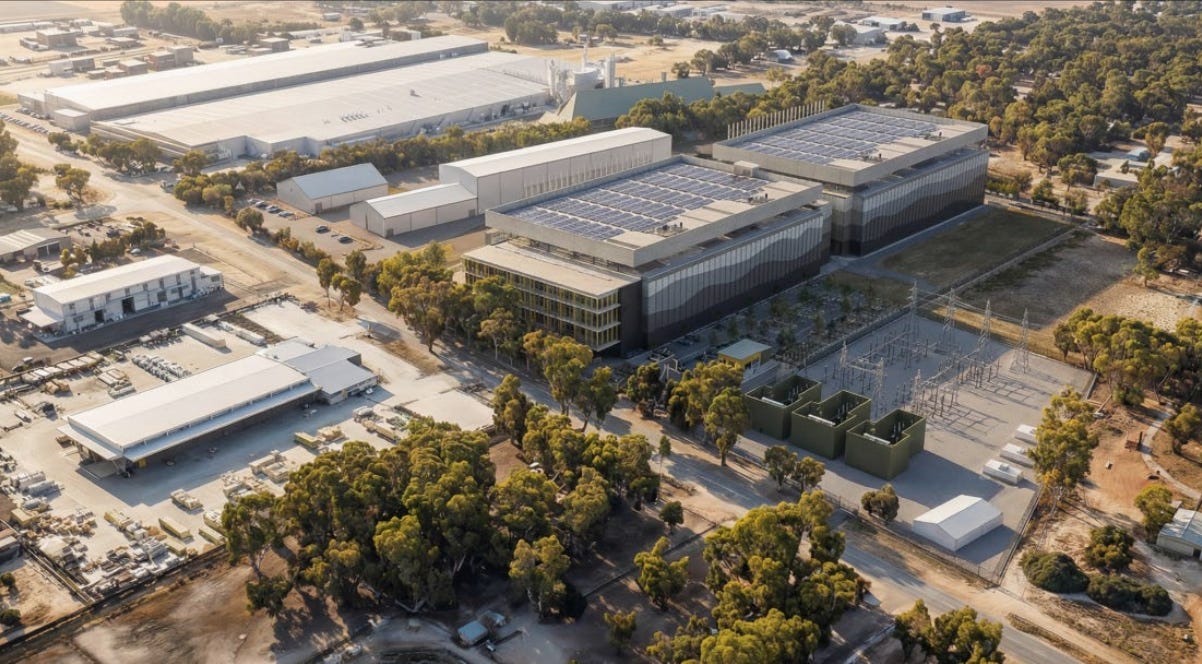
In our submission against the previous GreenSquare DC data centre proposal in Hazelmere, which the proponent eventually pulled after community backlash, the Mineral Policy Institute pointed out that data centres are akin to mining projects: they extract vast amounts of public resource for private profit and leave local communities and ecosystems to bear the cost.
Further, our current collaboration with Murdoch University is on the ‘just transition’. The original idea was to focus on the ‘justice’ side of the ‘just transition’, yet as it turns out, data centres suggest that the energy transition itself might not be happening at all, let alone ‘justly’.
The sheer scale of the added demand by hyperscale data centres makes the transition much harder: renewable energy capacity meant to replace coal and gas is directly absorbed by this new demand. In the best case scenario, this added demand slows down the transition, in the worst case scenario the narrative and promises of ‘transition’ justifies and legitimates actual energy addition.
Of course, some grid growth is to be expected as we electrify. But data centres are a clear case of addition: that demand did not exist before and it competes directly with the electrification part of the transition, it competes for the same new renewable energy capacity.
The new CDC project (192MW) in Hazelmere is a lot more resource hungry than the previous GreenSquare proposal (120MW).
Rather surprisingly, the size of the data centre in megawatts figures nowhere in the application. We only got the 192MW (2x96MW) figure from a CDC technician at the consultation meeting last week. That figure appears consistent with the total generator capacity on site, 307MW. Backup generators are sized to run the whole facility, servers and cooling, on the hottest day, with spare units on top. The 307MW is therefore a good indication of how much CDC expects the site to draw at its peak.
For context, earlier this year, the City recommended refusing the GreenSquare proposal over the potential noise of its 88 generators. CDC proposes 96 generators, come within 1dB of the limit modelled at 75% load, and approach “the limits of compliance”; whereas Greensquare was asked to model at 100% load. The submission highlights that there will be a tank of 76,500L of Diesel for every three generators. That is 2,448,000L of diesel, or about the volume of an olympic swimming pool.
How long does that volume of diesel allow the facility to run for in the case of a power outage (which is most likely to happen when the grid is most stretched, i.e. in a heat wave when the air is still)? Each generator at full capacity uses about 806L/h. Times that by 96 = 77,376L/h; or about 32h at 100% capacity. The same volume of diesel would fuel 2,400 cars for a year (assuming they consume 10L/100kms and do 10,000kms/year). That is a traffic jam from Hazelmere to the city (±14kms) or 8 soccer fields worth of car park. We should keep in mind that his diesel only gets burned in case of a power outage, but the numbers give us a feel for the amount of power this ‘warehouse’ needs on an ongoing basis.
Various details in the CDC application could point to a larger project to come. First, CDC’s documents refer to the building as “HA1”; should we be expecting a HA2?
Second, the future electrical substation, major infrastructure required to provide about a tenth of the entire grid’s current average demand, without which a facility like this one cannot operate, is described as follows: “can be considered incidental to the proposed warehouse land use, no different to the office use.” The proposed substation is to sit on a different lot to the ‘warehouse’, it is alternately counted in the application when it helps to describe the project, and left out of it when it comes to assessment. For example, the City’s page states “future electrical substation (not subject of this application)”.
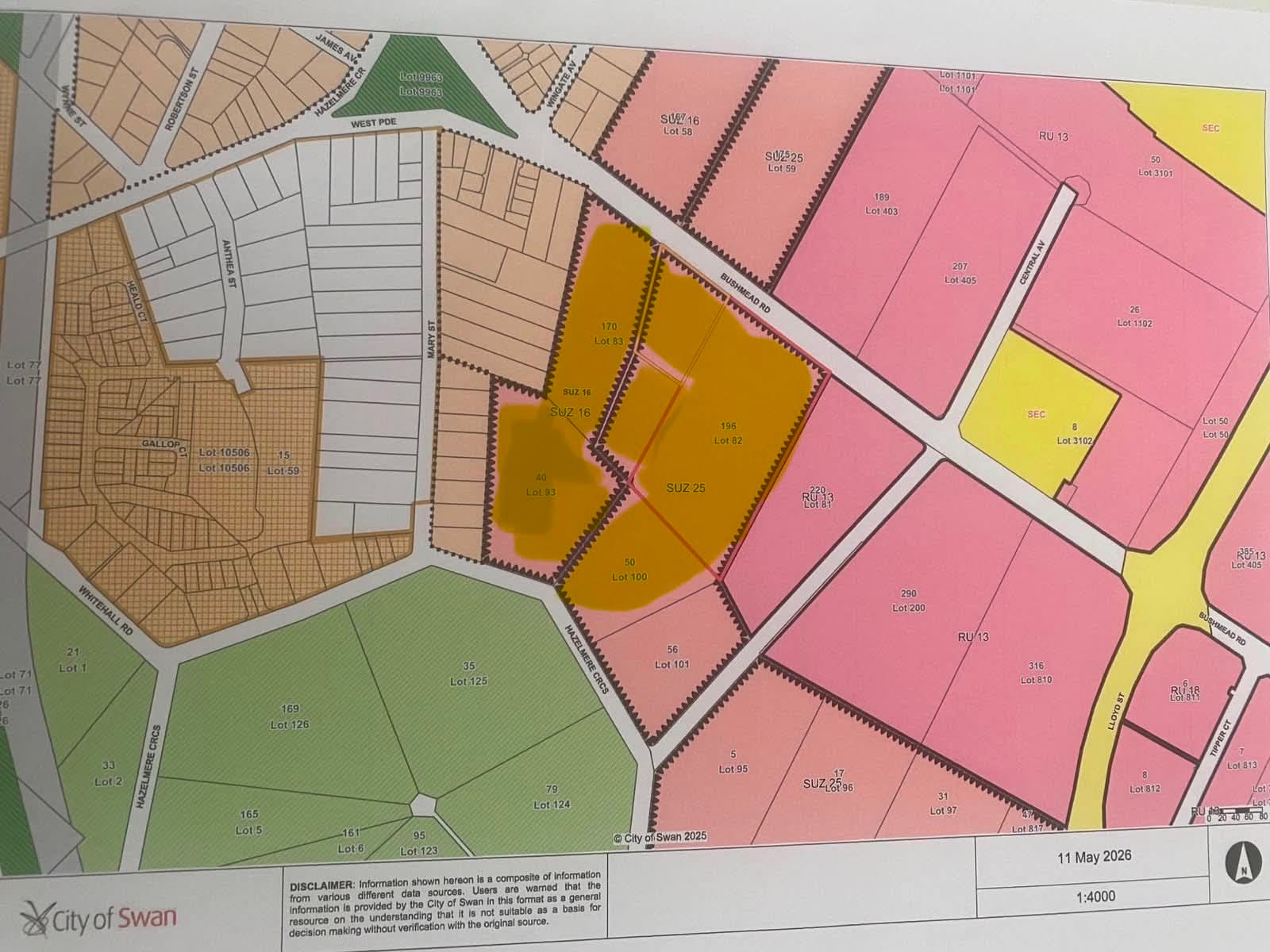
And third, local residents recently found out that CDC has also acquired the adjoining lots at 170 Bushmead Road and 40 and 50 Hazelmere Crescent, none of which are part of the current application. Salami-slicing - splitting a project into smaller projects - is a practice that prevents cumulative impacts to ever be assessed as a whole. Looking at the application, and the information we have gathered from outside, there are questions that need answers. MPI has made Freedom of Information Requests to the City of Swan, Western Power and the Water Corporation to try to answer some of them.
Moreover, in my interview with Trillion Trees (see above), I described the spin of closed loop ‘cooling’. Physics tells us that there is no such thing as cooling, cooling is only moving heat elsewhere. A fridge in a room cools the inside of the fridge, but it heats the rest of room. 99% of the energy going into data centres for computing gets released as heat which then needs to be displaced into the surroundings, creating a significant heat source in the area and ultimately contributing to global warming via carbon emissions and waste heat.
The ‘cooling’ (i.e. heat displacement) itself also consumes electricity. Power usage effectiveness (PUE) is the total power a data centre draws divided by the power used by its servers. In other words, in order to provide a certain amount of computing capability in MW, a data centre must provide an additional amount of MW to make that possible (mostly ‘heat displacement’ but also conversion and distribution losses, lighting, etc.).
Air-cooled chillers lose efficiency as the outside air heats up - a regular occasion in Perth. On our back-of-the-envelope estimates, Hazelmere could draw around 230–250MW (PUE 1.2-1.3)1 on an average day and 270–290MW (PUE 1.4-1.5) on a 40°C day, precisely at the time of peak demand on the grid, when everyone cranks up their air conditioning to keep ‘cool’ (i.e. displace heat outside of their homes).
CDC has not published a PUE for the site, but the 307MW generator capacity is consistent with a peak draw well above 200MW. Together with CDC Maddington (up to 200MW), the two facilities would potentially draw about 490MW on an average day and 550–590MW on a hot day - or about 4.3TWh a year.
AEMO forecasts underlying electricity consumption on the South West Interconnected System (SWIS, which runs up to Kalbarri and includes Kalgoorlie) to grow by 57% over the next decade, from 20.4 to 32.1 TWh.
Yet AEMO’s projection is likely a significant underestimation. AEMO estimates data centre consumption at under 0.8TWh/year by 2035-36. That figure rests largely on modelling rather than on the projects actually in the pipeline; AEMO itself acknowledges that one or two large projects would affect its projections. CDC’s two facilities alone, built to draw about 4.3TWh a year at full capacity, are more than five times AEMO’s forecast for the entire sector, and nearly 40% of the total projected growth for the next decade.
AEMO’s 57% amounts to about 4.6% growth a year. Physicist Tom Murphy has shown that even if all emissions magically stopped today, energy growth of just 2.3% a year would bring the Earth’s surface to boiling point, within about 400 years, from waste heat alone.2 If global energy use grew at 4.6%, 100℃ would be reached in 200 years.
As stated above, some of the forecasted growth is electrification replacing fuels rather than new energy use, but the two CDC facilities alone would add around 21% to current SWIS consumption. That is growth of close to 2% a year in total consumption over the decade, from these two facilities alone. That is a significant addition for ‘cloud’ infrastructure.
Despite the announcement this week of the Cook government’s yet-to-be-defined commitment to 75% renewables by 2031, the SWIS mix was still 59% fossil fuels in FY2024–25. Meanwhile, on the same day as Cook’s announcement, the Environmental Protection Authority quietly opened a seven day window for public comment on APA’s Keralup Energy Hub, the biggest gas-fired power plant yet - 870MW, more than 50% larger than WA’s current largest gas-fired station, Pinjar 576MW - with 251ha of native vegetation to be cleared. And the privately owned 434MW Bluewaters coal plant - not quite enough to power the two CDC facilities at full capacity - has been extended to 2031.
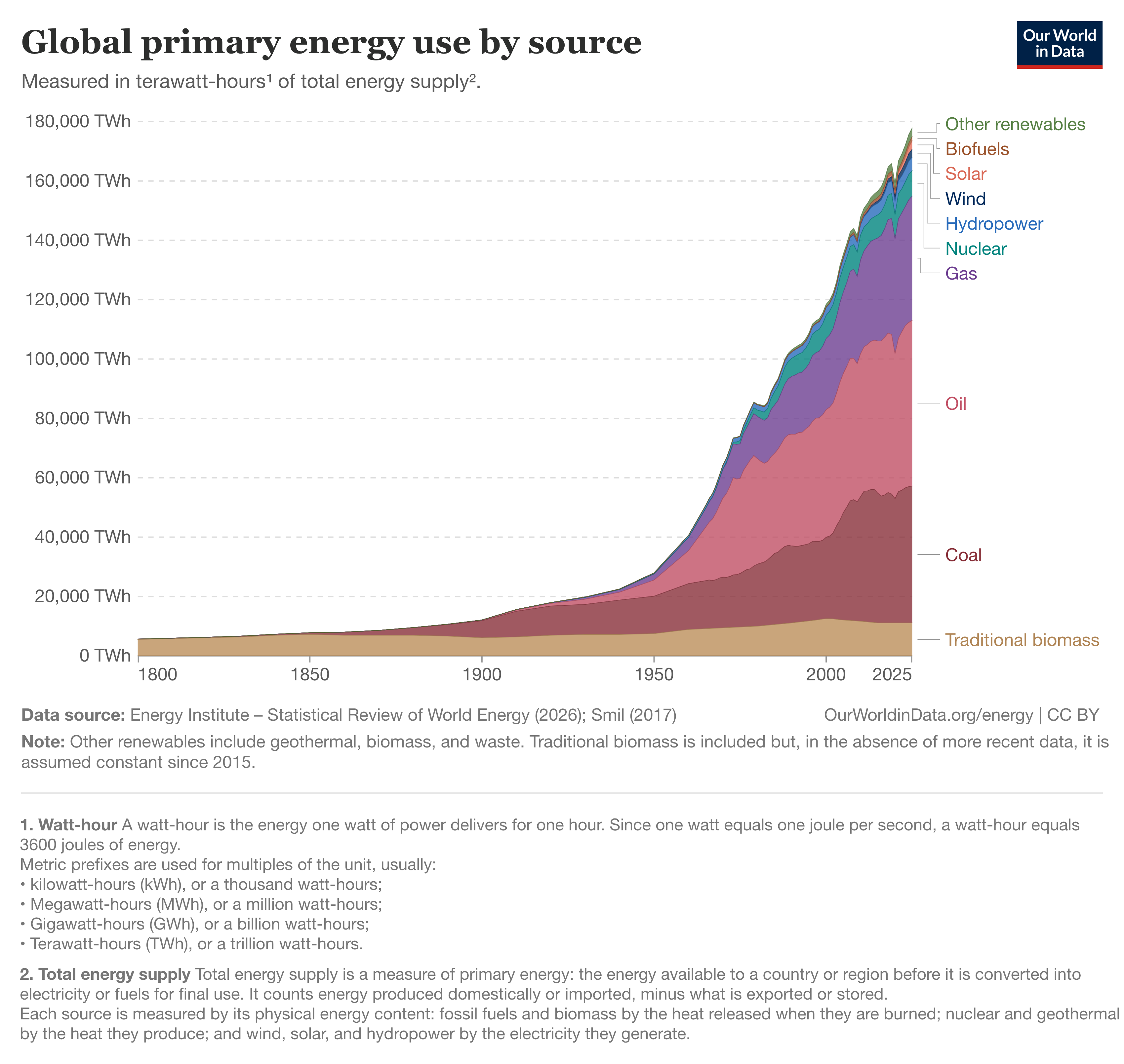
From where I stand, despite the promises and the talk of transition, it looks like we are implementing an energy addition not an energy transition. I don’t have the space here to even begin covering the justice side of this so-called transition.
Treating data centres like mining projects means applying our Mining Policy Principles: the right of affected communities to veto, assessment of cumulative impacts not just project by project assessments, and a meaningful test of whether the project serves communities and the transition or if it serves private profits and the energy addition.
We shouldn’t let ourselves be priced out of our own public utilities to release more carbon emissions (see here and here), and more heat, into our globally warming atmosphere.
As we know from the US, data centres are also an opportunity to rally people from all walks of life and all political stripes around something everyone opposes - a genuinely positive sight in the polarising times we live in.
The numbers don’t add up. People and ecosystems will be left paying the price. We can still say no.
Make sure to make your voice heard on the CDC Hazelmere data centre and on the APA Keralup gas power station.
Next DC sites in Perth run at 1.3 on average: 1.33 for P1 in Malaga and 1.29 for P2 in Perth.
See this classic dialogue between the exponential economist and the finite physicist, or find Murphy’s argument in short peer-reviewed form at Nature Physics. And here is a link to the open access longer version of the overall argument.
This raises an important question: are we building a clean energy future, or simply adding more energy demand? Data centres may power innovation, but their impact on local communities, resources and the grid needs to be part of the conversation too.